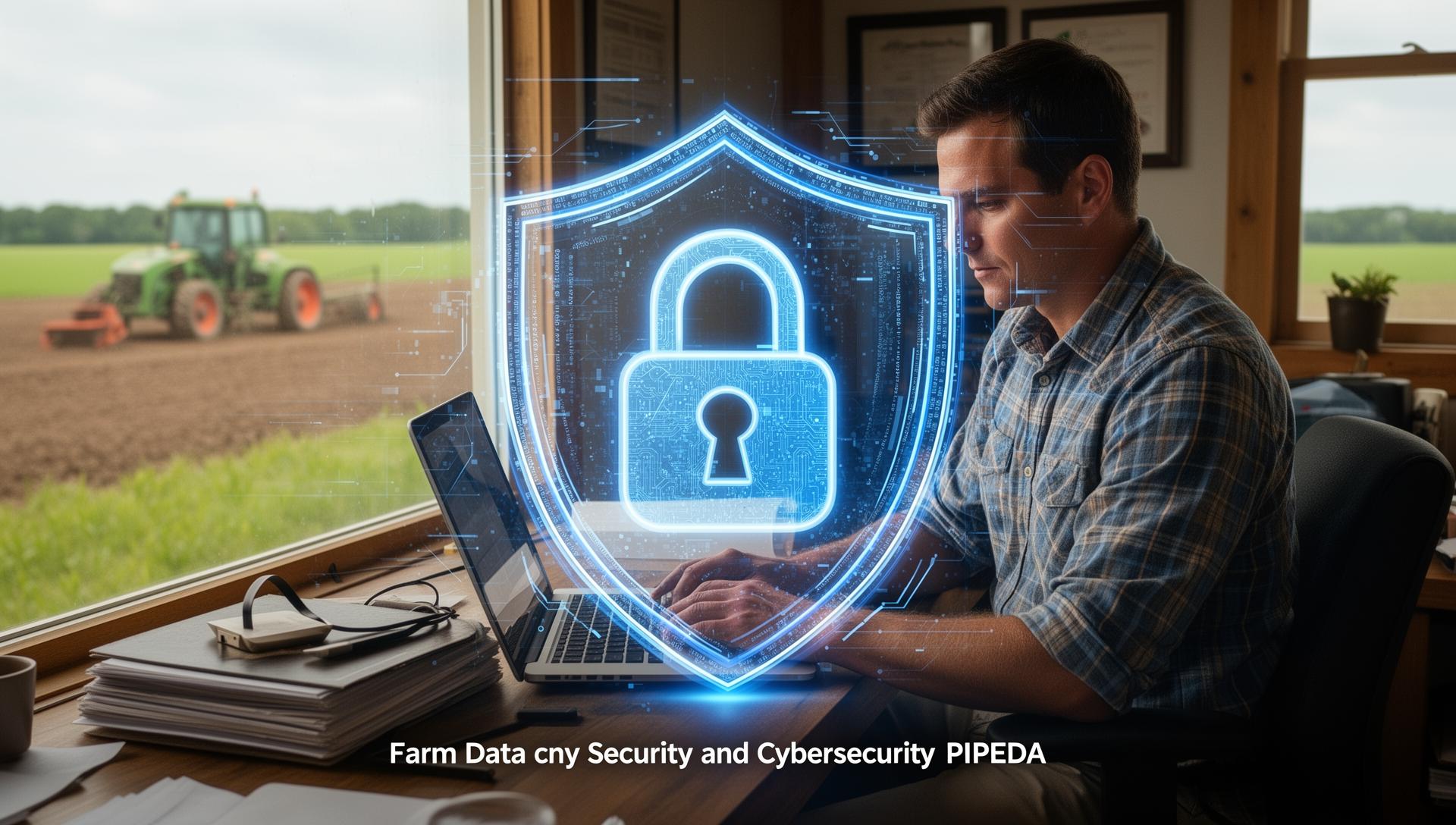
Canadian farms generate more data than ever—from GPS coordinates and yield maps to financial records and personal information. With this digital transformation comes serious responsibility for data security and privacy compliance. The Personal Information Protection and Electronic Documents Act (PIPEDA) applies to agricultural businesses, and data breaches can result in significant financial losses, regulatory penalties, and reputational damage.
Understanding Data in Modern Agriculture
Types of farm data at risk:
- GPS coordinates and field boundaries (competitive intelligence)
- Yield maps and production data (proprietary)
- Financial records and banking information
- Employee personal information (SIN, addresses)
- Customer and supplier contact details
- Input purchase and application records
PIPEDA and Canadian Privacy Law for Farms
PIPEDA—the Personal Information Protection and Electronic Documents Act—sets the ground rules for how businesses collect, use, and disclose personal information. Provincial variations exist in Alberta (PIPA), British Columbia (PIPA), and Quebec (Law 25), but the core principles remain consistent across Canada.
When PIPEDA Applies to Your Farm
PIPEDA applies when you:
- Employ workers and collect their personal information
- Store customer or supplier contact details
- Work with contractors who provide personal information
- Share data with technology vendors or agronomists
- Use precision agriculture platforms that collect farm data
Farm Cybersecurity Threats
Common Cyber Attacks on Farms
Growing threats to agriculture:
- Ransomware targeting farm operations and cooperatives
- Phishing emails and social engineering
- Equipment hacking and GPS spoofing
- IoT device vulnerabilities
- Cloud storage breaches
- Insider threats from employees and contractors
Cybersecurity Best Practices for Farms
Password and Access Management
Essential security measures:
- Use strong, unique passwords for every system
- Implement multi-factor authentication (MFA)
- Set up user access levels and permissions
- Change passwords regularly
- Avoid shared account credentials
Network and Device Security
Protecting your farm network:
- Secure WiFi networks with separate guest access
- Keep router firmware updated
- Use VPN for remote access to farm systems
- Install antivirus and malware protection
- Regularly update all software and apps
Data Backup and Recovery
Follow the 3-2-1 backup rule: maintain 3 copies of important data, on 2 different types of storage, with 1 copy stored offsite. Test your recovery procedures regularly—a backup you cannot restore is worthless.
Choosing Secure Farm Management Software
Questions to ask technology vendors:
- Where is my data stored? (Canadian servers preferred)
- Who has access to my data?
- What encryption standards are used?
- How is data backed up?
- What happens to my data if I cancel service?
- Do you comply with PIPEDA?
Employee Training and Policies
Human error causes most security breaches. Create farm data security policies, require employee confidentiality agreements, train staff on phishing recognition, and establish clear incident reporting procedures.
How AgriIntel Protects Your Farm Data
Our security commitment:
- Canadian data residency (account and farm data hosted in Canada)
- Encryption in transit (TLS) and row-level isolation in our database
- Built with PIPEDA-aligned privacy practices
- Zero data monetization—we never sell your information
- You own your data, with self-serve account deletion and export
- Two-factor authentication available on your account
- A transparent security posture — we publish what we have and have not certified
Your farm data is valuable—protect it with a platform built for Canadian privacy standards. Start your free 14-day trial with AgriIntel.
Get Started Free